That the character of a wine is defined first and foremost by the terroir that forges the vines is an undeniable fact. But that the hand of man is decisive in determining style is equally indisputable.
The new technical staff, led by Nicola Biasi and coordinated by Camilla Capriotti Cocci Grifoni, carries forward in the cellar some choices made in the first decades of the 1900s.
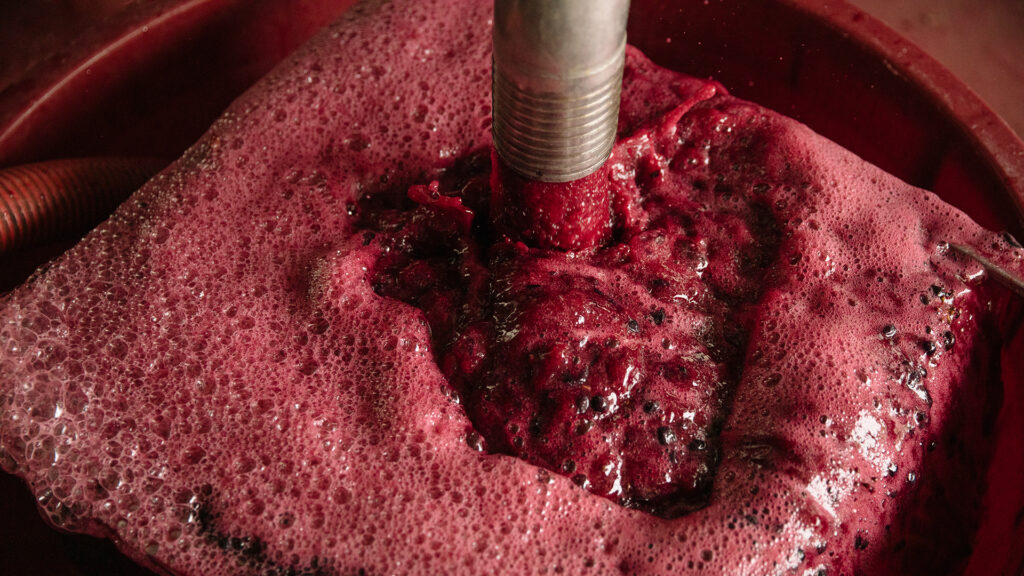
Cement and large woods then for the maturation of montepulciano and sangiovese. The only novelty compared to the past is the fermentation of the estate reds in steel, which guarantees greater speed of maneuvering and intervention than cement tanks. And it is precisely in the phase involving steel that the winery swerves from super-extraction, aimed at obtaining muscle and inky-black colors, to the search for red wines, aascinating, persuasive, deep and, above all, that tell the story of tradition. Very short macerations then and racking in the middle of alcoholic fermentation for Montepulciano, longer instead for Sangiovese in vintages when the skins allow it. A dedicated and delicate oenology that allows to extract and keep the maximum of the aromatic kit trapped in the skins and nothing else. Scents and aromas above pulp and volume.
From steel, the sudden transition to cement ensures less oxidation to achieve a bouquet of crisp fruit and fresh flowers. Aging takes place between a mix of cement and large wood. Each vintage is its own, and human sensitivity will allow new wines to age in the container best suited to the vintage. There are no precise percentages. The wine decides.
The vineyard of origin has already established the path of its fruit and what will become who. Another great and important innovation is the focus on sangiovese, capable of great expressions in Piceno and an inseparable companion to montepulciano in Rosso Piceno.
Marilena Cocci Grifoni has already planted two new hectares of sangiovese in February 2023 and two more were planted in March 2024. Both plantings count 5,000 vines per hectare and represent a very strong stance. We ask her if this is how she lives this moment. She replies, “We want to produce wines that are more refined, pleasant and able to appeal to a younger audience as well. I am convinced that the choice of Sangiovese is correct because I consider it a suitable grape variety for this new challenge.” The story of boldness and beauty continues.